|
Southwestern
Pennsylvania Waterways
|
|
Geography of Southwestern PA
The French Creek flows into the
Allegheny River at Franklin and heads towards Pittsburgh, a low
plateau. There, the Allegheny combines with the Monongahela River
to form the Ohio. The Ohio River then flows into the Mississippi,
providing an early and current transportation route from Canada
to the Gulf of Mexico.
An Altered Ecosystem
Western PA's waterways
were not always as they are today. In fact, then the Monongahala
River was the dominant river flowing north to Lake Erie and draining
the southwest section of the state. This transformation over time
was a result of glaciation during the Ice Age, which occurred more
than 2 million years ago. As glaciers formed, eroded, and deposited
sediments, new valleys were formed and fed with water, while other
waterways were abandoned. Glacial erosion and deposition altered
the landscape topography so much that the drainage patterns in Western
Pennsylvania switched from a northerly journey into Lake Erie to
a southerly path to the Ohio River Watershed.
Cultural History
Because the waterways of Western
PA made trade and transportation possible, several settlers found
the area to be an attractive place to colonize. Once the Industrial
Revolution hit in the early 1800's, steel mills began to take over
the city and ultimately the waterways. Mining for coal to fuel these
massive mills led to polluted rivers through acid mine drainage.
The mills also dumped their wastes into the river, raising the temperature
to dangerous levels and killing aquatic life. The invention of steamboats
and railroads allowed for the shipment and dispersal of steel to
other industries, but at the cost of the environment. Forests were
cut down to accommodate the railways and trees were used in the
construction of the rail planks. With railways flanking each side
of the waterways, steamboats navigating the waterways, and industries
polluting the waterways, population grew, aquatic life died off,
and toxic floods spread disease. Luckily, in the 1960's the public
demanded that the waterways be "cleaned-up" through government
programs and community-wide organizations. Rachel Carson, a Pittsburgh
native, was instrumental in uncovering ecological threats in 1962
through her book, Silent Spring. Today, Pittsburgh's Three
Rivers are home to many species of aquatic life and a favorite recreation
spot for young and old alike.
|
|
|
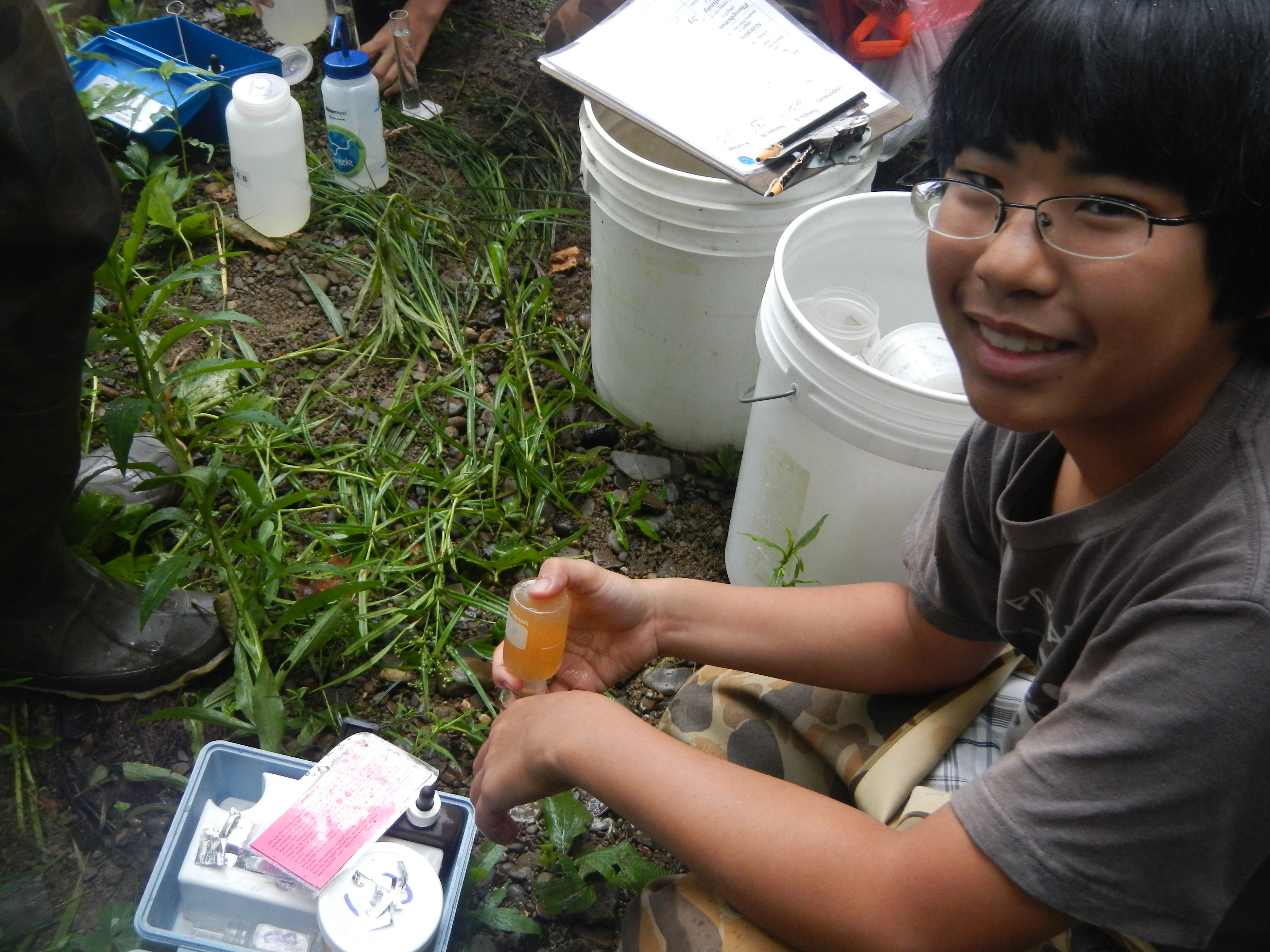
Ellis School tests
here on the Allegheny River, but do they know that George Washington
almost died crossing this river in the winter of 1753? Be careful
kids! |
|
Transport
and Travel
Pittsburgh became a
popular city because of its easily assessable waterways. Canals
were developed beside the rivers and streams for transportation.
Water, from the rivers and streams, would be regulated and used
to fill the canals to hold large barges, which were pulled by oxen
walking at the side of the canal. Later, the steamboat made human
transportation efficient and even stylish, being able to go against
the current of the waterway. With the booming success of steal production,
railway systems were laid, generally beside a waterway since the
oxen's tread path had already been determined. As ships, tugboats
and barges became common ways to transport material and people,
Pittsburgh's waterways grew to be busy and crowded, to accommodate
economic growth. Pittsburgh's waterways are still crucial to its
economic and industrial growth. According to the Army Corps of Engineers
in a 1998 study, it is the busiest island port in the nation. Nearly
34,000 jobs depend on the water transportation system.
Threats
to the "Three Rivers"
A lot has been done to clean up
the damage done to waterways by the Industrial Revolution, but there
are still cases of acid mine drainage from abandoned mines. Rain
running through these mines makes its way into the rivers with a
dangerously low pH, putting stress on the life within the river.
Metal particles can also be washed into the river from abandoned
coalmines, causing streams to turn yellowish-orange and sticking
to the gills and eggs of fish. Also, since the rivers are located
in an urban area, there are fewer trees to filter out pollutants
and help control erosion, as a healthy riparian zone would. Some
parts of the rivers are channeled, leading to wildlife inaccessibility
and full exposure, which could raise the temperature of the river
since there are no trees to provide shade. Finally, pesticides and
herbicides from lawns are being washed into the rivers from heavy
rains and general run-off, along with pavement macadam chemicals.
The added chemicals are toxic to aquatic animals and can contaminant
ground water.
|
|
The orangish-yellow
color of the water suggests acid-mine drainage, from current and
abandoned mines, a common threat to water quality in Southwestern
PA.
|
|
|
Current Conservation Programs/Policies
It is good to know that measures
are being taken to stop some of the threats to the local rivers,
along with conservation policies, which look towards the future.
In 1999, an "anti-degradation policy" was passed as part
of the Federal Clean Water Act "to promote maintenance and
protection of existing water quality." Other groups, such as
the Allegheny County Conservation District and the Western PA Coalition
for Abandoned Mine Reclamation work towards improved waterways.
The Clean Water Fund generates money through violations against
already passed clean water laws. Students are also taking part in
waterway conservation through projects such as Creek Connections,
where students study the water chemistry of their stream and assess
its health, the Environthon, where students present the environmental
experiments they performed, and through studies and projects in
the classroom.
|
|
|
Students from Upper
St.Clair check out the macroinvertebrates they caught in their kick-net
to see how healthy their stream is. |
|
|
|